Zero to Hero: Benchmarks/Datasets for Robotics
Physical AI hands-on

SUMMARY
VANTAGE-Bench asks: Can the model observe and understand fixed-camera physical scenes?
Artificial Analysis Image to Video asks: Can the model animate an image in a way humans prefer?
PAI-Bench Image2Video asks: Can the model predict physically meaningful future video in physical-AI domains?
RBench-V asks: Can the model reason visually by producing useful multimodal intermediate outputs?
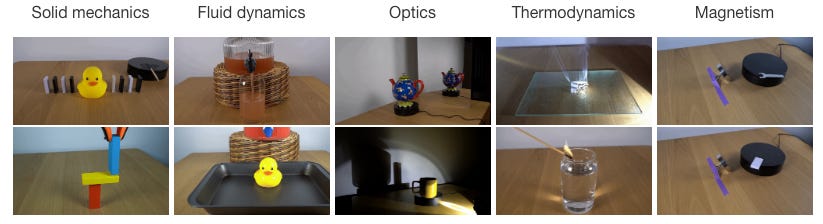
Physics-IQ asks: Does the generated future obey physics rather than merely look realistic?
RoboLab asks: Can a robot policy act successfully under task and environment variation?
Robotics has always been where “pretty demos” go to meet reality. In classical ML, a model can succeed by recognizing labels. In robotics, the model must understand state, motion, contact, causality, uncertainty, and action. The newer generation of physical-AI benchmarks is trying to measure exactly that: not whether a model can describe a scene, but whether it can reason about what is happening, what will happen next, and what a robot should do.